
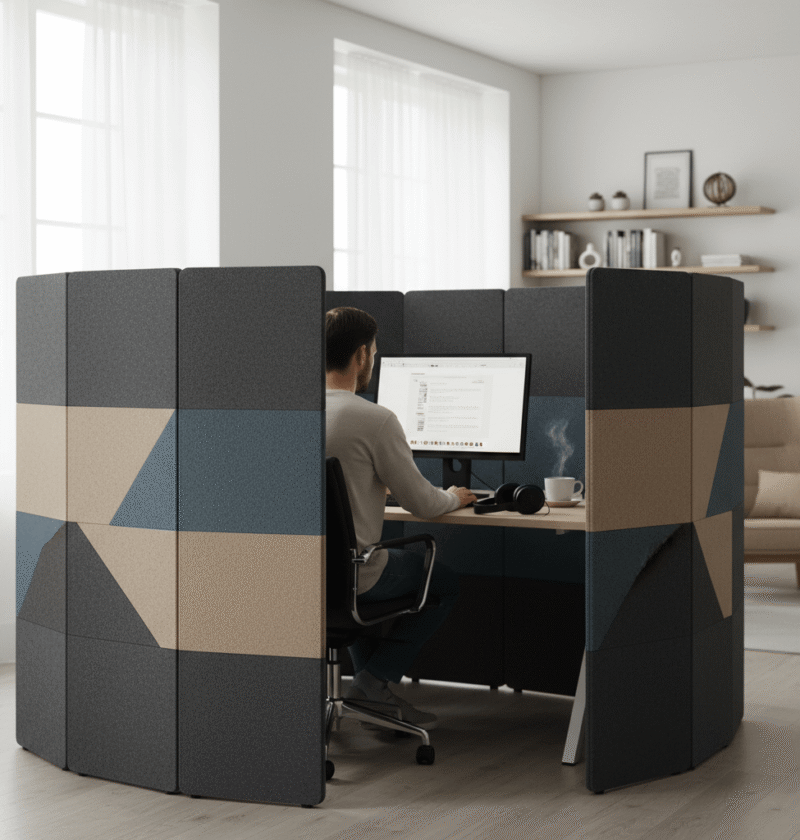
Working from home brings many benefits and also new challenges. One of the most common obstacles people face is staying concentrated when household noise, echoes, and reverberation break up thought flow. Small distractions create big time losses during deep work sessions and meeting times that require clear speech.
This article looks at how well chosen home office panels can improve concentration and reduce audio clutter. You will find practical advice on panel types placement and performance testing plus tips for balancing functional sound control with a pleasing look. Expect examples you can try this week and checklists that make setup simple.
Why sound matters for concentration in a home workspace
Sound affects task performance more than many realize. Studies show that intermittent noise and human voices are particularly disruptive to tasks that require sustained attention. When a neighbor or household member passes by a window or a kettle clicks in the kitchen the brain shifts resources to process that sound even if you do not respond consciously.
Reducing unwanted reflections and background sound helps the brain maintain a steady level of attention. That means you can finish complex tasks faster make fewer errors and have clearer spoken communication during calls or recordings. Practical sound control is not about creating total silence. It is about reducing the events and echoes that pull attention away from your work.
How panels work to reduce distractions and sharpen focus
Acoustic panels slow and absorb sound waves so reflections do not bounce repeatedly around a room. In a typical home office hard surfaces such as glass walls packed bookshelves or bare floors create a lively space where sounds linger. Panels placed at key points turn a lively room into a forgiving one where noises lose their punch before they reach your ears.
The benefit for concentration is twofold. First panels reduce the number of distracting sound events that reach you. Second they improve speech clarity during calls so you do not have to strain to hear or repeat yourself. For a morning deep work session and an afternoon call a modest set of panels often delivers visible improvements in time on task and perceived effort.
Types of panels and how to pick the right option
Panels come in several materials and formats and each has strengths for the home setting. Fibrous panels made from mineral wool or polyester offer broad frequency absorption and perform well against mid and high frequency noise. Fabric wrapped options combine function with design and can be selected to match wall color and room style.
Rigid panels and foam tiles are lightweight and easy to mount while thicker slabs provide stronger low frequency control which matters in open plan spaces or rooms with appliances that hum. There are also soft panels that double as pin boards which work well in a multi use room where you need both sound control and a place to pin notes.
When choosing consider size thickness and density. A larger flat panel at ear height reduces reflections more than a small tile placed randomly. For small rooms a few well positioned medium sized panels are more effective than many tiny tiles scattered across the space.
Best placement practices for panels to maximize concentration
Placement matters more than having a high count of panels. Think of panels as targeted fixes for the paths sound takes from source to listener. Start with the following checklist and adjust after testing.
- Place a panel on the wall directly across from your desk to catch reflections from your speaking voice and monitor sound
- Add a panel to the wall behind your monitor to reduce reflected keyboard and mouse noise that can echo into a microphone
- Consider the first reflection points from your side walls for mid frequency control
- Ceiling panels help when floor surfaces are hard and when voices or kitchen noises travel down into the work area
Desk area placement tips
For someone who spends long stretches at a desk a single large panel behind the monitor plus a smaller panel to the side can make a major difference. This combination reduces the perceived loudness of nearby noises and creates a steady sound field that supports reading and writing. If you host video calls adding a panel behind your chair that sits between you and the room helps the other person hear you clearly.
Room perimeter and ceiling strategies
If your home office is part of a larger room panels on a wall opposite the main source of noise often work well. Ceiling hung panels are very effective in rooms with high ceilings or loft style spaces where reflections come from above. Use a mix of wall and ceiling treatment instead of only one type to address multiple reflection paths.
Design and style considerations that keep a room inviting
Sound treatment need not feel clinical. Many manufacturers offer panels in a range of finishes shapes and colors that integrate easily with home decor. Panels can be framed like art mounted as a grid or used as a large single element that becomes the focal point of the room. Soft edges and textile coverings improve visual warmth and help the panel blend with furniture pieces.
Remember that the best design balances visual appeal and acoustic function. A panel that looks great but sits in the wrong place will not yield the concentration gains you want. Start with the acoustic plan then choose colors and textures that complete the design objective.
Testing results and quick ways to measure improvement
Practical tests help confirm whether your panel plan works for you. Record a short voice clip in the room before and after installing panels and listen for echo and clarity differences. Ask a colleague to rate call quality or use simple sound level apps to compare reverberation times. While not lab grade these tests give quick feedback and help fine tune placement.
Another simple measure is subjective tracking. Note how many interruptions you experience each hour before adding panels and again after a week of use. Changes in time spent in deep work and fewer call retries are strong indicators that the panels deliver better conditions for concentration.
Budget planning maintenance and longevity
Panels range from affordable foam tiles to premium fabric wrapped slabs. For most home offices a mid range set offers the best value. Prioritize buying larger effective panels over many small decorative tiles. Installation is often simple with command strips or small brackets and most panels are easy to move as your needs change.
Maintenance is generally minimal. Dust with a soft brush or vacuum with a soft brush attachment on low power. For fabric surfaces follow manufacturer cleaning guidance. Well made panels retain their performance for years so initial cost spreads out over long term use making them a cost effective addition for anyone who spends substantial time on focused work or frequent calls.
Where to learn more and find options that fit your workspace
If you want product ideas and examples in Dutch market settings the linked resource below offers local options plus installation advice and visual examples. This is useful when you prefer to see actual application photos and read about real room outcomes akoestische panelen.
When comparing vendors look for clear specs on absorption coefficients frequency performance and recommended placement. Videos showing before and after recordings are especially helpful because they let you hear expected results before buying.
Common mistakes to avoid when adding panels
Several pitfalls slow down results and waste budget. First avoid over relying on tiny tiles placed low on a wall. They reduce little and often end up more decorative than useful. Second do not ignore the ceiling in rooms with high reflection times. Third do not assume color or design choices will compensate for poor placement. Finally be cautious with self adhesive solutions on plaster or delicate paints and test an inconspicuous spot first.
Home office panels can change how a workspace sounds and how well you can concentrate. They are a practical and visible intervention that addresses the real causes of audio distraction. Place panels where reflections reach you first test with recordings and subjective tracking and choose styles that fit your room so the treatment feels like part of the space rather than a retrofit.
Ready to reduce interruptions and improve the quality of your calls and deep work sessions Start with one or two medium sized panels aimed at your desk area and add more as needed. If you are unsure about placement make a quick recording before installing then another after a test arrangement to measure the difference. Small moves can deliver meaningful gains for time spent focused and the clarity of remote conversations. Take the next step this week by mapping first reflection points and ordering an affordable panel set so you can experience the change quickly.


